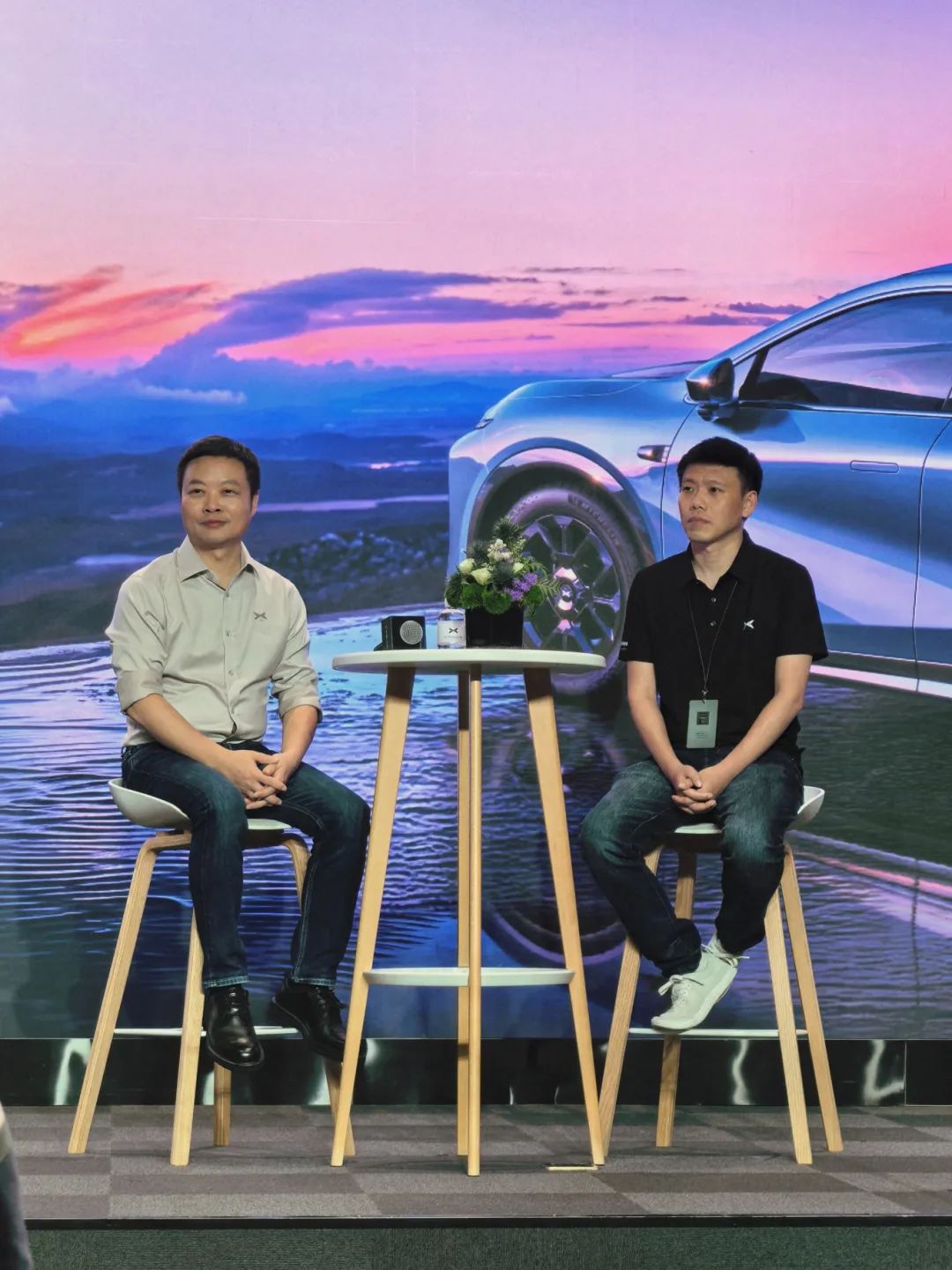
Last week, Xiaomi's Yu7 made a storm in the Chinese auto industry, achieving unprecedented numbers with 200,000 orders in just three minutes, 289,000 in one hour, and locking in 240,000 orders in 18 hours. Such impressive figures are truly unheard of. During a livestream event on Wednesday, Lei Jun mentioned that the order situation exceeded expectations, stating that if someone needs a car urgently, domestic new energy vehicles are a good choice, suggesting the upcoming XPeng G7. From last night's launch event, it is clear that the XPeng G7, which Lei Jun endorsed and is positioned as a 'smart family' mid-size pure electric SUV, performed well and effectively followed in the wake of Xiaomi Yu7. In the first half of the year, XPeng achieved significant delivery results, surpassing 190,000 vehicles from January to June, with monthly deliveries consistently exceeding 30,000 units, primarily supported by the MONA M03 and P7+ models, both priced below 200,000 yuan. To elevate the brand and avoid falling into low-end, low-margin traps, XPeng needed to establish a solid presence in the price range above 200,000 yuan, and the G7 was tasked with this mission. The G7 offers three versions, priced at 195,800 yuan for the 602 long-range Max version, 205,800 yuan for the 702 ultra-long-range Max version, and 225,800 yuan for the 702 ultra-long-range Ultra version, along with various benefits, showcasing great sincerity. It also strategically avoids direct competition with Xiaomi Yu7, filling the gap between the 2025 models of XPeng G6 and G9. The G7's key selling points can be summarized as 'family-friendly + intelligent.' The vehicle emphasizes driving space and comfort, providing equitable seating and ample storage, making it feel like a 'no-shortcomings' vehicle. The G7 features an 800V system and comes with 5C power batteries, ensuring stable performance. Compared to its primary competitor, the Tesla Model Y, the G7 holds a significant advantage. Additionally, the Max version's smart cockpit and driving chips use a Snapdragon 8295 and two Nvidia Orin-X chips, representing the industry's mainstream hardware level. The Ultra version, priced at 225,800 yuan, upgrades to a Snapdragon 9295 and three self-developed Turing AI chips with a computing power of 2250 TOPS, making it a strong attractor for potential customers. Although it remains to be seen how the Ultra version's experience compares to the Max version, the slight price difference of 20,000 yuan offers significant future potential. The differentiation between XPeng G7 and Xiaomi Yu7 lies in their focus, with the latter emphasizing aesthetics and handling while the G7 opts for a family-oriented and intelligent approach. After the launch event, a small-scale interview was held, during which XPeng's CEO expressed confidence despite the fierce competition from Xiaomi Yu7. XPeng G7 achieved over 10,000 orders in just nine minutes, showcasing promising performance. Regarding profitability, with the G7 priced between 195,800 and 225,800 yuan, there are concerns about whether XPeng can profit. However, the CEO reassured that the pricing won't affect the company's goal of improving gross margins. He also highlighted the need for enhanced capabilities in technology, organization, commercialization, and global strategy, indicating XPeng's commitment to growth. Overall, while XPeng has navigated through challenges and is on a path to healthy development, significant challenges remain, including the G7's ability to carve out a market share in the face of stiff competition from Xiaomi Yu7 and others in the segment. Expectations for initial sales of around 5,000 units would be considered a solid performance, with an eye on how well the Ultra version performs.
Xiaomi Yu7 Shakes Up Chinese Auto Industry; Can XPeng G7 Compete?
Share this post on: