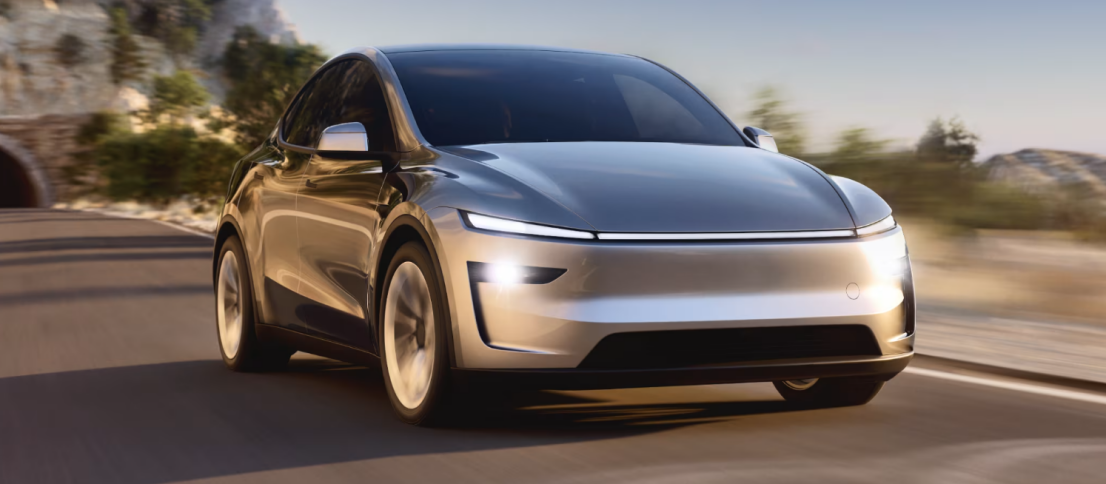
According to Reuters, on July 25, California regulators revealed that Tesla plans to launch a ride-hailing service operated by human drivers for a specific audience in the San Francisco Bay Area, rather than the previously reported robotaxi service. A spokesperson for the California Public Utilities Commission (CPUC) pointed out that unlike Waymo, a subsidiary of Alphabet that operates autonomous vehicles, Tesla cannot provide robotaxi services with self-driving vehicles, as it has neither obtained the necessary permits nor submitted applications. The spokesperson made it clear that Tesla is prohibited from testing or transporting the public with autonomous vehicles in the San Francisco Bay Area, even if the vehicles are equipped with human safety drivers. Tesla is only allowed to transport passengers through 'human-driven non-autonomous vehicles.' On July 24, Tesla notified CPUC of its plan to provide ride services to 'friends and family of employees' and 'specific groups of the public,' under its transportation license, which only permits the use of traditional non-autonomous vehicles with human drivers for ride services. For the San Francisco Bay Area service, Tesla may utilize its Full Self-Driving (FSD) (supervised version) feature, which can perform multiple driving tasks but still requires the human driver to remain attentive to take over the vehicle at any moment. The CPUC spokesperson has not yet responded regarding whether Tesla can use the FSD (supervised version) feature, but such technology does not require a California autonomous vehicle permit, as it mandates human drivers to control the vehicle at all times. It is important to note that for companies to test or deploy autonomous vehicles in California, they must obtain several licenses from both CPUC and the California Department of Motor Vehicles (DMV). So far, Tesla only holds a DMV-issued permit for autonomous testing with a safety driver. A DMV spokesperson confirmed that while Tesla recently met with regulators, it has not yet applied for the two critical permits for passenger-carrying operations and testing without a safety driver. According to California autonomous vehicle regulations, Tesla's next step is to apply for a permit from CPUC to allow its autonomous vehicles to carry passengers with a safety driver. However, the company must first be in a pilot phase and may not charge passengers during this period. Tesla did not immediately respond to requests for comment regarding the above report. Recently, Tesla CEO Elon Musk stated during the Q2 earnings call that the company is 'working on regulatory approvals' and plans to launch robotaxi services in the San Francisco Bay Area and other markets. Business Insider reported on July 25 that its robotaxi service will be staffed by human drivers to ensure that they can take over the vehicle when necessary. Tesla's head of autonomous driving, Ashok Elluswamy, mentioned during the earnings call on July 23 that the company will roll out a robotaxi service in the San Francisco Bay Area, initially staffed by human drivers to accelerate the service rollout while waiting for regulatory approvals. Last month, Tesla launched a pilot robotaxi service in Austin, Texas, where it initially deployed around 12 Model Y SUVs. Tesla invited a limited number of passengers to participate in the testing, with a human safety supervisor in the front passenger seat, while the Tesla Full Self-Driving software controlled the vehicle. Currently, Waymo, which provides robotaxi services in Los Angeles and the San Francisco Bay Area, has accumulated over 13 million miles of testing after nine years of technological development and has obtained seven different regulatory permits in California, ultimately being authorized in 2023 to offer paid robotaxi services to passengers.
Tesla Plans Human-Driven Ride-Hailing Service in San Francisco Bay Area
Share this post on: